
Two moves.
Seven days.
One printable.
Order, then walk.
Same food, same calories — two changes. Put vegetables and protein before the carbs, and take a ten-minute walk after the meal. In published trials the order alone cut post-meal glucose peaks by 29–54% and the walk trimmed the rise by another 12–22% — in adults with type 2 diabetes or prediabetes; healthy adults respond more modestly (Shukla 2015 & 2019; Reynolds 2016).
First, just watch.
The week opens with honesty, not discipline. Two days: log three meals exactly as they happen, then sequence a single one — vegetables or protein before the carbs. In published trials, food order alone cut post-meal glucose peaks by 29–54% in adults with type 2 diabetes or prediabetes.
Shukla et al. · Diabetes Care 2015 →- 1
The temple. Log three meals exactly as they happen. No changes yet — the honest baseline is the point. (1 Corinthians 6:19–20)
- 2
Wonder. Pick one meal. Vegetables or protein first — the first few non-carb bites are what count. (Psalm 139:14)
Add the walk.
Three days of building: two sequenced meals, a ten-minute walk after one of them, then both moves together. Research suggests walking soon after eating lowers the post-meal rise by 12–22% in adults with type 2 diabetes — more than the same walk at any other hour.
Reynolds et al. · Diabetologia 2016 →- 3
Plants. Push it to two sequenced meals. Salad before pasta, eggs before toast. (Genesis 1:29)
- 4
Daniel’s test. After one meal, walk ten minutes within about fifteen of finishing. A loop around the block counts. (Daniel 1:12)
- 5
Discipline. Combine both moves on two meals. This is where most people feel the rhythm. (1 Corinthians 9:25)

Eat with joy.
The last two days loosen the grip. Sequence and walk if it fits the day, skip the grading, and write one sentence about the week. You finish by choosing what you keep — both moves is fine. One is fine.
- 6
Joy. Sequence and walk if it fits the day. Skip the grading — the tracker is not a court. (Ecclesiastes 9:7)
- 7
The offering. Write one sentence about the week. Decide which move you are keeping. Both is fine. One is fine. (Romans 12:1)

“Go, eat your bread with joy, and drink your wine with a cheerful heart, for God has already approved your works.”
One page. Everything on it.
Two science-backed moves
Food order and a short post-meal walk — cited to Shukla 2015 + 2019 and Reynolds 2016.
A daily 3-slot meal log
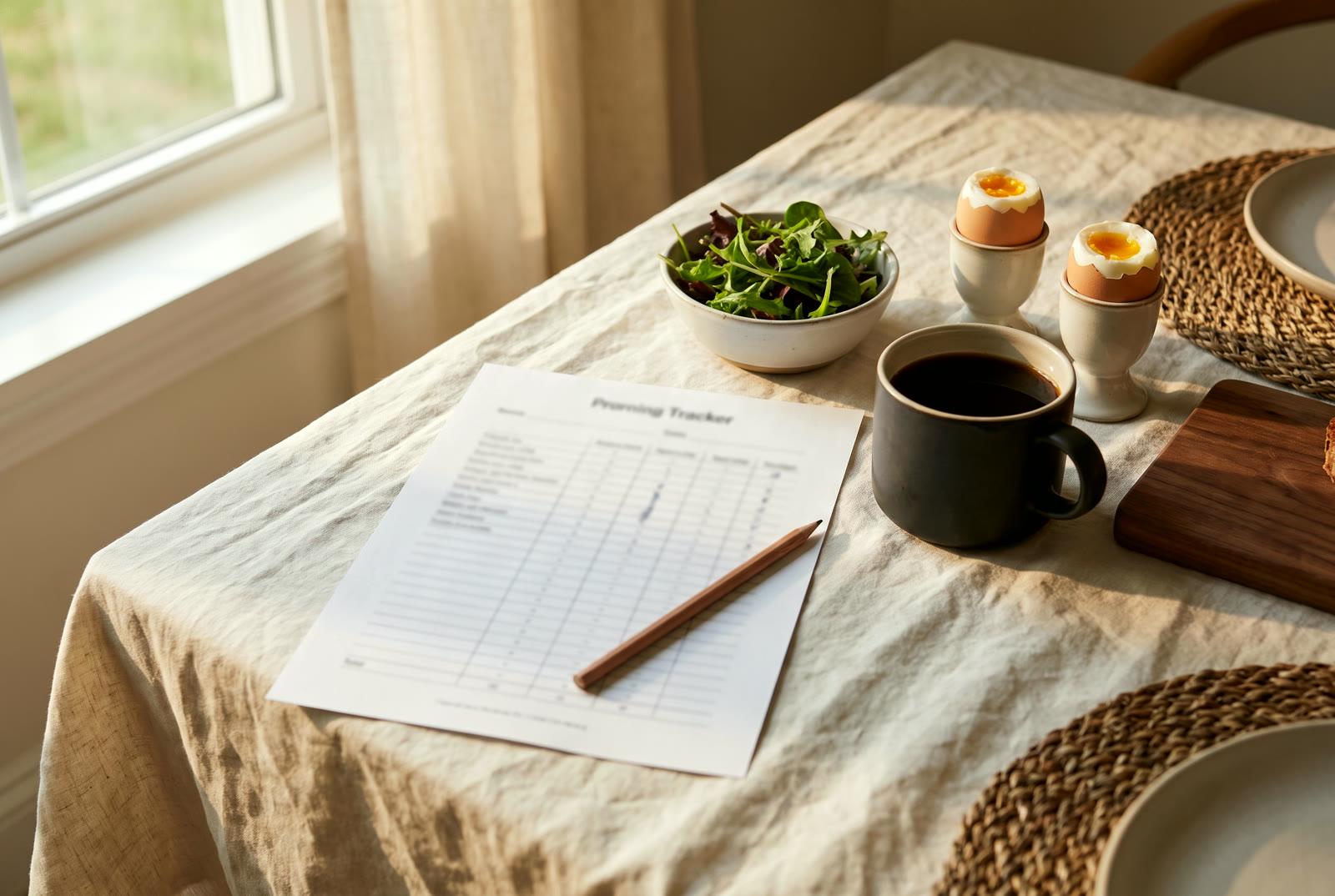
Describe the meal, mark sequenced ✓ if vegetables or protein came first, mark walked ✓ after ten minutes.
Seven short BSB verses
One per day, body-stewardship framing. Skip them if scripture isn’t your thing — the protocol still works.
A one-line reflection prompt
Today’s win, today’s surprise, or today’s bottleneck. The reflection matters more than the checks.
Honest expectations, in writing
Population qualifiers in the same sentence as every percentage. No predictions, no medical advice.
smaller post-meal peaks from food order alone, in adults with T2D or prediabetes.
lower post-meal rise from one ten-minute walk, in adults with T2D.
one printed page, three meals a day, one line of reflection.
Common questions.
Will this lower my blood sugar by 29–54%?
Probably not by that much. The 29–54% number is from Shukla 2015 (T2D) and Shukla 2019 (prediabetes) — the largest effects were observed in adults with metabolic dysfunction. Healthy adults respond, but the size of the response is smaller and individual. The honest framing in the PDF says this in the same sentence as every percentage.
Do I need a continuous glucose monitor?
No. The tracker is paper-and-pencil by design. We don’t want you chasing a number on your wrist for seven days — the goal is to internalize a pattern (food order + a short walk) and notice how you feel. CGMs have their place; this is not it.
I’m on diabetes medication. Is it safe to do this?
Talk to your healthcare provider first. Adding sequencing or post-meal walking can change your post-meal glucose response, which means insulin or other medications may need to be adjusted. This is educational, not medical advice.
What does "sequenced" actually mean?
Eat vegetables or protein first, save the higher-glycemic carbs for last. Salad before pasta. Soup before sandwich. Eggs before toast. The first few bites being non-carb is what counts — not perfectly clean separation.
What’s the difference between this and the 7-Day Reset Guide?
The Reset Guide is a fasting ramp from 12:12 to 16:8 — it’s about WHEN you eat. This tracker is about HOW you eat (order) and what you do AFTER (a 10-minute walk). They’re complementary. Most people start with one, then add the other.
What about Buffey 2022 and the 17% number?
We deliberately didn’t cite it in this PDF. The 17% drop in Buffey’s study came from accumulated all-day walking breaks, not a single post-meal walk. Reynolds 2016 (12–22% in adults with type 2 diabetes) is the right citation for a single post-meal walk and the one we use.
“Therefore I urge you, brothers, on account of God’s mercy, to offer your bodies as living sacrifices, holy and pleasing to God, which is your spiritual service of worship.”
Two moves.
Seven days.
Tracked.
Free printable. Instant email. No CGM, no medical claims, no upsell. Bring it back if it helped — or don't.